


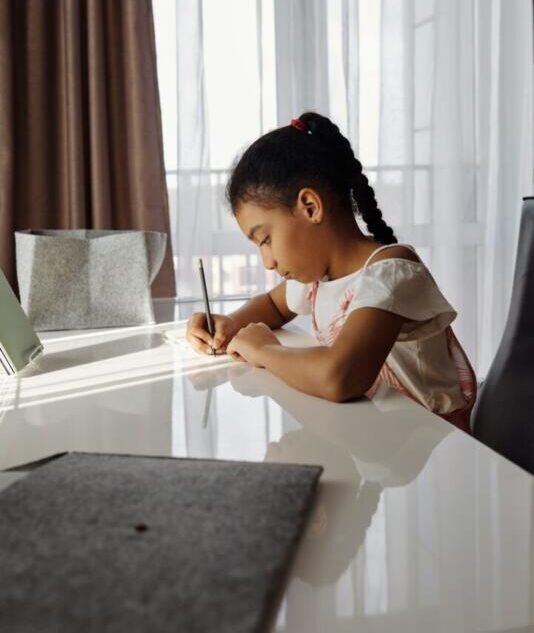

The biggest mistake students make is studying on their beds or the living room couch. Psychologically, the brain associates the bed with sleep and the couch with relaxation. When you try to mix intense focus into those areas, the brain gets confused, leading to sluggishness. Help your child choose a specific desk, a quiet corner, or even a designated spot at the dining room table that is used exclusively for schoolwork. Over time, sitting in that exact spot will act as a psychological anchor, instantly signaling the brain that it is time to work.
Our smartphones, tablets, and gaming consoles are carefully engineered to hijack our focus. Expecting a child to resist the ping of a notification while solving math problems is an unfair fight. Build a physical “Digital Garage”—a decorative box, basket, or charging station located completely out of arm’s reach (or outside the study room entirely). Until the study timer goes off, all non-educational devices go into the garage.
A messy desk leads to a messy mind. When a student’s workspace is buried under old papers, random toys, and loose art supplies, their visual field is constantly overwhelmed, which drains cognitive energy. Keep the desktop minimalist. The only items allowed on the workspace are the specific textbook, notebook, laptop, and writing utensils required for the task currently at hand. Everything else should be tucked away in nearby drawers or organizing bins.

Physical discomfort is a silent focus killer. If a student is slouched over a low table, squinting in a dimly lit room, or sitting on an uncomfortable chair, their brain will constantly focus on their physical fatigue instead of their homework. Ensure their workspace is well-lit — ideally with natural window light or a focused desk lamp. Adjust their seating so their feet can rest flat on the floor and their laptop screen sits comfortably at eye level to prevent neck strain.
A home is a busy place, filled with vacuum cleaners, sibling conversations, and kitchen noises. To protect your child from auditory distractions, introduce sensory boundaries.
I’ll never forget a student I worked with last year during an online touch-typing course. Every single time our half-hour typing class started, their well-meaning grandma would decide that exact moment was the absolute best time to practice her massive church organ songs for the upcoming Sunday sermon! As beautiful as the music was, it’s nearly impossible for a child to concentrate on building finger-speed mechanics when the entire house is literally vibrating with pipe organ chords.
To block out the unexpected soundtracks of home life, a pair of noise-canceling headphones or a simple desktop white-noise machine works wonders. If your student prefers audio background elements, skip the pop music with catchy lyrics (which forces the brain to process language) and opt for instrumental lo-fi beats, classical tracks, or nature sounds that naturally stimulate focus.
 Designing a beautiful, distraction-free study space sets the physical stage for academic success—but mastering the mental executive habits to utilize that space effectively is the next crucial step. Learning how to manage a calendar, break down large projects, overcome procrastination, and maintain focus are distinct academic skills that must be explicitly cultivated.
At MyTutorLesson, our customized K-12 Private Tutoring and Academic Mentorship Programs work one-on-one with students to build robust learning frameworks. We combine elite subject matter mastery with essential organizational and time-management training, helping your child develop the internal discipline, academic confidence, and self-advocacy skills needed to excel in the classroom and beyond.
Set your child up for their best school year yet.
Want expert advice on how to tailor a study setup for your child’s specific learning style? Reach out to our veteran educational team anytime at info@mytutorlesson.com!