Use code NEWSTUDENT at checkout & save 20% off your first order (any number of lessons)

The Bookworm Logic Puzzle: Can You Solve It?

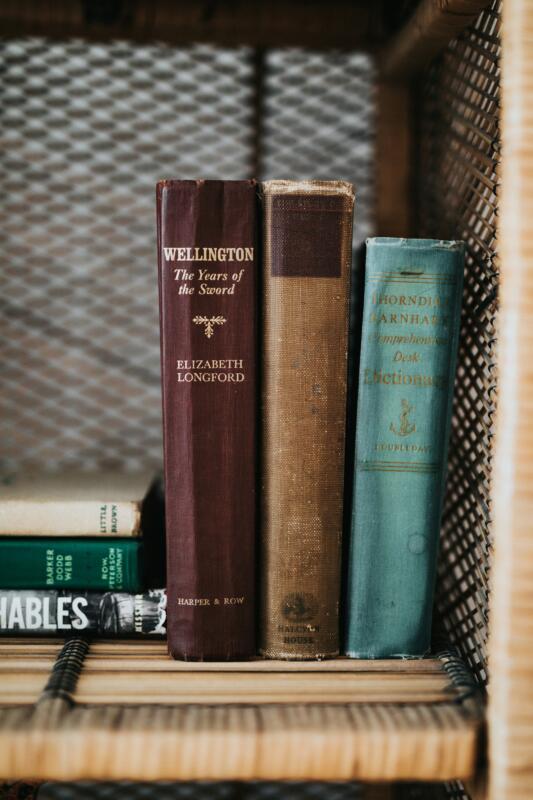
Three volume book set sitting neatly in order on a wooden bookshelf.

The Bookworm Logic Puzzle: Can You Solve It?

Thinking & Brain Teasers: The Bookworm.

A set of three books displayed in a fanned out fashion.
Image by Kiwihug via Unsplash

In mathematics and problem-solving, it is incredibly easy to fall into the trap of rushing straight to an arithmetic formula without pausing to visualize physical constraints. Friday logic puzzles teach students to slow down, challenge default assumptions, and develop strong spatial visualization skills. Today’s classic head-scratcher demonstrates why reading a problem carefully — and visualizing how objects exist in three-dimensional space — is far more powerful than making quick assumptions.


The Bookworm

A three-volume set of books sits neatly on a bookshelf in the standard order, from left to right (Volume 1, Volume 2, and Volume 3).

Each individual volume contains exactly 300 pages.

An aggressive little bookworm comes along and starts eating a straight horizontal path from page 1 of Volume 1 all the way to the very last page of Volume 3.

Not counting the book covers, how many pages did the bookworm actually eat?

(Hint: Don’t just do the quick math—think carefully about how books actually sit side-by-side on a shelf!)

The bookworm actually only ate 300 pages! While your first instinct might be to multiply 300 pages by 3 volumes to get 900 pages, the trick lies entirely in how books sit on a shelf:

  1. Locate Page 1 of Volume 1: Take any book off your shelf and hold it ready to read. The front cover is on the front, and the spine is on the left. When you place that book back on the shelf with the spine facing you, the front cover (and page 1) is actually on the right side of that book, touching Volume 2.
  2. Locate the Last Page of Volume 3: Similarly, the back cover (and the last page) of a book on a shelf sits on the left side of that book, also touching Volume 2.
  3. Trace the Worm’s Path: The bookworm starts at page 1 of Volume 1 (the right side of the book). It chews immediately through the front cover, goes entirely through the middle book (all 300 pages of Volume 2), chews through the back cover of Volume 3, and stops right as it hits the last page of Volume 3.

Because it started on the inside edge of Volume 1 and stopped on the inside edge of Volume 3, it never touched a single page inside Volume 1 or Volume 3!

From Tricky Riddles to Math Confidence

A student reading a book at The Last Bookstore where the books are artfully arranged in an open circle. 📚 Model: Ying Ge
Image by Ying Ge via Unsplash

Puzzles like “The Bookworm” do more than provide a quick mental workout — they train the brain to look past surface-level numbers and analyze underlying structures. When students learn to pause, map out physical scenarios, and question quick assumptions, their approach to complex geometry, word problems, and scientific logic transforms. Developing this flexible, analytical mindset turns frustrating math obstacles into enjoyable, logical victories.


Unlock Your Problem-Solving Potential

Struggling to make these logical connections in your math coursework? We are here to help bridge the gap! Visit MyTutorLesson.com to schedule a personalized, one-on-one math tutoring session designed to build confidence and make tricky concepts feel effortless.

Have a favorite brain-teaser or a riddle of your own? We would love to feature it! Send us an email at info@mytutorlesson.com with your puzzle idea, and you might see it featured in an upcoming Friday post!