

Use code NEWSTUDENT at checkout & save 20% off your first order (any number of lessons)
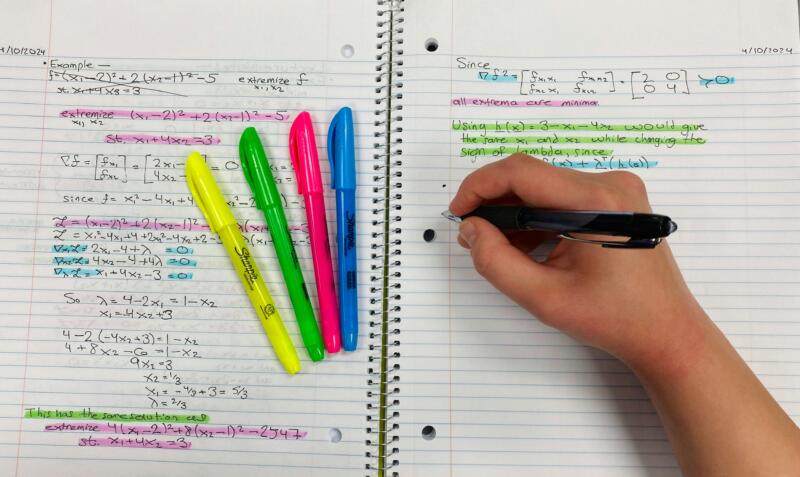

In elementary school, basic memorization can often carry a student through spelling lists and multiplication tables. However, as coursework advances into higher-level mathematics and technology, passive memorization quickly hits a wall. Success in subjects like algebra, geometry, and digital productivity requires deep conceptual synthesis, logical reasoning, and real-world application. To achieve lasting academic mastery, students must shift from simply asking “What is the formula?” or “Which key do I press?” to understanding “Why does this process work?”
Break complex scientific or mathematical systems down into their most basic, undeniable components, then rebuild the logic step-by-step.
Always pair algebraic equations with geometric or graphic representations to anchor abstract numbers in visual spatial logic.
Encourage students to test what happens when variables approach zero or infinity to deepen their intuition for how equations behave.

Moving beyond memorization is about building logical thinking patterns that transfer across every academic discipline. Whether a student is navigating algebraic equations, mastering geometry proofs, or building essential computer literacy skills like touch-typing and Microsoft Office applications, true confidence comes from understanding foundational systems. When students learn to break complex problems into intuitive, logical steps, frustrating coursework becomes manageable — and learning becomes an empowering, rewarding process.