


Use code NEWSTUDENT at checkout & save 20% off your first order (any number of lessons)

Have you been told that your voice affects your life? That it impacts you personally and professionally?
QUESTION: I’ve been told that my voice is not very pleasant to listen to. Can the sound of your voice directly affect your ability to find an excellent partner, a better job, and a happier life?
ANSWER: Yes, your voice directly reflects the rhythm of your life by exposing your mood, influencing social interactions, and reflecting your internal health. The pitch, speed, and tone of your voice can either induce calmness or trigger anxiety. Regular intentional vocal use, such as singing, can improve cardiovascular health; reduce stress in your nervous system; and enhance emotional balance.

Your voice is more than just a delivery system for words; it’s an invisible thumbprint that shapes every room you walk into. Long before someone digests the substance of your argument or the punchline of your joke, they have already subconsciously judged your confidence, your mood, and even your competence based on the frequency and texture of your tone. From the high-stakes boardroom pitch to the quiet vulnerability of a first date, the way you sound can either build an instant bridge of trust or create an unintentional wall. In a world increasingly dominated by audio notes, podcasts, and video calls, understanding the silent power of your vocal cords isn’t just about public speaking — it’s about mastering the most human tool you own.
Brain Chemistry & Mood: Your voice is a reflection of your nervous system and neurotransmitter levels. A low, monotone voice often accompanies low dopamine (burnout). While a faster, more energized tone can uplift your mood and increase feelings of happiness.
Physical Relaxation: Using a soft, steady voice, particularly while singing or humming, activates the vagus nerve, which acts as a “calm-down” switch for the body, lowering heart rate and reducing stress.
Social & Emotional Impact: Your vocal tone and pitch act as social cues for safety or tension, influencing how others respond to you and shaping your social environment and relationships.
Self-Perception and Health: A strained or weak voice can cause anxiety, lowered self-confidence, and social isolation, creating a negative feedback loop in your daily life. Conversely, using your voice with confidence can enhance your sense of purpose and overall well-being.
Impact on Internal Harmony: A forced change in voice can cause a feeling of losing one’s identity, while regaining a comfortable voice can restore one’s sense of power and control in life.
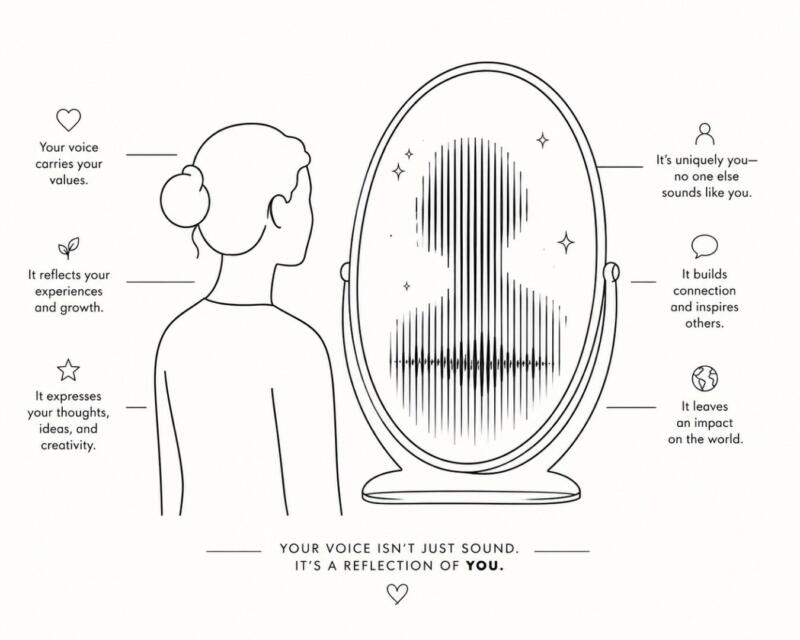
So, yes, your voice significantly impacts your ability to succeed. It acts as a crucial tool for communicating authority, confidence, and authenticity, which can influence career trajectories, leadership opportunities, and personal relationships. Tone, pitch, and volume shape how others perceive your competence, trustworthiness, and emotional intelligence.


Your voice is not just a mechanism for speaking, but a reflection of your inner state, and improving your vocal skills can lead to greater self-esteem and success.
Ultimately, your voice is the bridge between your inner thoughts and the outer world. It is a dynamic instrument that can be tuned, refined, and wielded with intention to reflect the best version of yourself in every arena of life. By leaning into the nuances of how you sound, you do more than just speak—you command attention, foster deeper connections, and ensure that when you finally do have something important to say, the world is actually listening. Whether you’re closing a deal or comforting a friend, remember that your words provide the map, but your voice provides the soul.
MYTUTORLESSON – ASK A QUESTION

We invite you to “Ask MyTutorLesson” a question about how to improve your voice. Your question can be answered by our Voice and Speech Teacher, Bill Patti. Do you have a question? Please contact us at info@mytutorlesson.com.