

SAT Saturday: Advanced Math & Exponential Models

📝 Week #16 Practice Questions: Advanced Math & Exponents
Question 31: Complex Exponents & Custom Operations
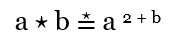
If a new mathematical operation is defined as:- A) 1
- B) 100
- C) 1/100
- D) Undefined
- E) 0
Question 32: Exponential Growth Functions (Grid-In Style)
Writing Equations from Context:
(Write down your answers! Full step-by-step solutions will be revealed in next week’s SAT Saturday post.)
💡 Quick SAT Math Tip for Week #16
The Exponential Growth & Decay Blueprint:
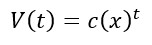
For any exponential model:![]()
- c (Initial Value): The starting amount at time t = 0.
- x (Growth/Decay Factor):
- For Growth: x = (1 + rate)
- For Decay: x = (1 – rate)
- Example: A 6% growth rate means x = 1 + 0.06 = 1.06.
🏆 Week #15 Answer Key & Detailed Explanations
Let’s review the step-by-step solutions for last week’s Algebra and Linear Functions questions.
A logistics company uses the equation C = 2.50x + 75 to calculate the total cost, C, in dollars, for a ground delivery shipment traveling x miles. Which statement is the best interpretation of the number 75 in this context?
- A) The cost increase, in dollars, for each additional mile traveled.
- B) The total number of miles the delivery truck can travel on a single trip.
- C) The minimum or initial charge, in dollars, to set up and load the shipment.
- D) The average speed of the delivery truck in miles per hour.
Correct Answer: C) The minimum or initial charge, in dollars, to set up and load the shipment.
The Concept:
In linear equations of the form y = mx + b, the constant term b is the y-intercept.
The Breakdown:
- The variable x represents the number of miles traveled.
- Setting x = 0 gives C = 2.50(0) + 75 = 75.
- Therefore, $75 represents the base charge before any distance is covered — the fixed setup or loading cost.

Scenario:
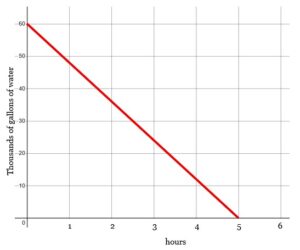
A municipal maintenance crew is completely draining a commercial swimming pool to perform structural repairs. The graph above models the volume of water, V, in thousands of gallons, remaining in the pool t hours after the drainage pump is turned on.
Question:
Based on the graph, at what constant rate, in thousands of gallons per hour, is the water being drained from the swimming pool?
- A) 10
- B) 12
- C) 50
- D) 60
Correct Answer: B) 12
Step-by-Step Breakdown:

- Identify the Goal: The phrase “at what constant rate… is the water being drained” tells us to find the rate of change (the magnitude of the slope).
- Identify Two Grid Points:
- Point 1 (y-intercept): (60, 0) — The pool initially holds 60 thousand gallons.
- Point 2 (x-intercept): (5, 0) — The pool is empty after 5 hours.
- Calculate the Slope (m):

- Interpret the Result: A slope of means the volume decreases by 12 thousand gallons per hour. The rate of drainage is 12 thousand gallons per hour (Option B).
⚠️ Trap Answer Breakdown:
- Option A (10): A common calculation error caused by misreading axis grid lines.
- Option C (50): Uses an arbitrary number that does not match key intercepts.
- Option D (60): Identifies the initial volume of the pool (60 thousand gallons), not the rate of drainage.
Master SAT Advanced Math with MyTutorLesson
Tackling exponential functions, custom function definitions, and multi-step word problems under test-day pressure can be daunting.
At MyTutorLesson, we help students develop clear strategies to breakdown complex SAT Math questions, identify trap answers, and increase accuracy.
Ready to Elevate Your Student’s SAT Score?
Help your student build confidence and achieve their target score with personalized, one-on-one SAT instruction.

- 🌐 Explore Our SAT Prep Packages: Visit MyTutorLesson.com to view available scheduling options.
- 📧 Have Questions? Email Us: info@mytutorlesson.com