

Liquid Capacity Conversion: Cups, Quarts & Gallons

Beakers and measuring containers filled with colored liquid on a desk.

Liquid Capacity Conversion: Cups, Quarts & Gallons

Building Real-World Measurement Fluency and Proportional Reasoning

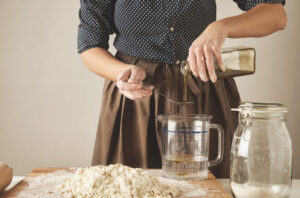
Student pouring liquid into a measuring cup in the kitchen.
Image by Bublikhaus via Magnific
Understanding liquid capacity conversion—transitioning between cups, pints, quarts, and gallons—is a vital milestone in elementary and middle school mathematics. From a pedagogical standpoint, measurement conversion teaches students how units relate proportionally rather than relying on rote memorization. By mastering fractional parts and scaling factors, students build critical proportional reasoning skills that lay the groundwork for advanced algebraic scaling, unit analysis in chemistry, and proportional geometry. Beyond the classroom, capacity conversion is an essential life skill used constantly in everyday routines. Whether you are scaling a recipe in the kitchen, mixing cleaning solutions, calculating fuel efficiency, or managing liquid volumes in professional trades like culinary arts, nursing, and engineering, knowing how units scale up and down prevents costly mistakes and builds complete independence.
 

🎁 Ready to Build Unshakeable Math Confidence?

Special Offer: Get a Free 30-Minute Math Tutoring Session to target learning gaps and master measurement conversions!

🥛 Core Concept: Unlocking the Customary Capacity Ladder

When students learn liquid volume in the US customary system, navigating between cups, pints, quarts, and gallons can feel overwhelming. Instead of memorizing random numbers, it helps to use the conversion factors step by step:

  • 2 Cups = 1 Pint
  • 2 Pints = 1 Quart (or 4 Cups = 1 Quart)
  • 4 Quarts = 1 Gallon (or 16 Cups = 1 Gallon)

When converting from larger units to smaller units, you multiply (scaling down). When converting from smaller units to larger units, you divide (scaling up).


✏️ Step-by-Step Worked Example

Let’s look at an example problem (similar to what students tackle on today’s worksheet):

Example Problem

A baker needs to convert 3 gallons of milk into cups for a large batch of pastries. How many total cups is that?

🔍 Solution

  1. Convert Gallons to Quarts: Since 1 gallon = 4 quarts, multiply by 4.

3 gallons (4) = 12 quarts

  1. Convert Quarts to Pints: Since 1 quart = 2 pints, multiply by 2.

12 quarts (2) = 24 pints

  1. Convert Pints to Cups: Since 1 pint = 2 cups, multiply by 2.

24 pints (2) = 48 cups

(Alternatively: 3 gallons (16 cups/gallon) = 48 cups)


🧪 Download Your Free “The Alchemist’s Potion Lab” Worksheet

Step into the potion lab! Students act as master alchemists mixing moon water, dragon milk, and stardust oil while practicing liquid capacity conversions.

The Alchemist’s Potion Lab Answer Key

  • Recipe Step 1 (Moon Water):

    3 Gallons (4) = 12 Quarts
  • Recipe Step 2 (Dragon Milk):

    12 Pints / 2 = 6 Quarts
  • Recipe Step 3 (Liquid Sun):

    8 Cups / 2 = 4 Pints
  • Recipe Step 4 (Stardust Oil):

    5 Quarts (4) = 20 Cups
  • Challenge Elixir Calculation:

    • 12 Quarts (4) = 48 cups
    • 6 Quarts (4) = 24 cups
    • 4 Pints (2) = 8 cups
    • Total Elixir: 48 + 24 + 8 + 20 = 100 cups of Elixir

🔮 Transforming Measurement Practice into Magic

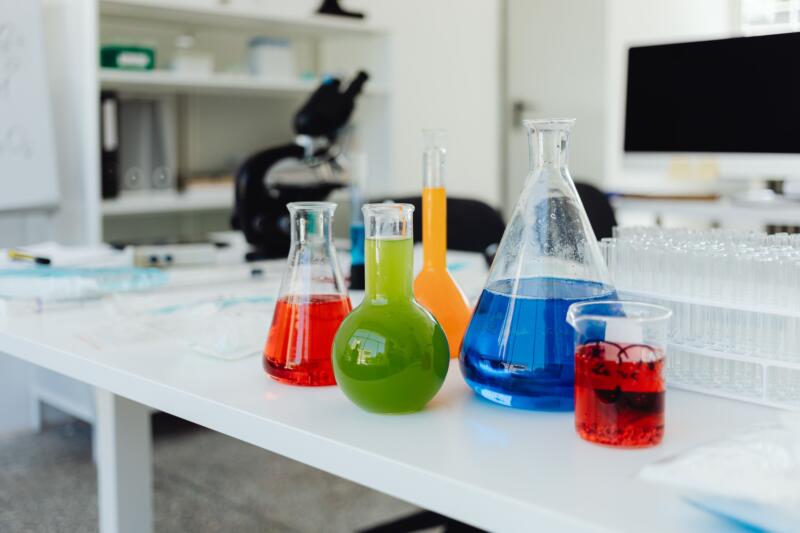
Beakers and measuring containers filled with colored liquid on a desk.
Image by Kaboom Pics via Pexels

When students explore measurement through imaginative, themed challenges like “The Alchemist’s Potion Lab,” math transforms from dry workbook exercises into an engaging puzzle. Mastering capacity conversions gives learners the practical independence they need both in academic settings and in everyday life.


🎯 Build Lasting Math Fluency with Expert Guidance

Measurement conversions and proportional reasoning are foundational skills that grow more important with every grade level. When students understand the underlying logic of how units scale, math anxiety disappears and confidence takes over.

At My Tutor Lesson, we provide tailored, 1-on-1 online tutoring designed around your student’s unique pace and learning style. Let’s work together to turn tricky math concepts into lasting victories!

Claim a Free 30-Minute Lesson!

Empower your math learner with expert 1-on-1 guidance and zero obligation:

Fill out a quick inquiry on our Contact Us page, and we will send a 1-on-1 private lesson invite directly to your inbox. Choose between a Math Masterclass or a Speaking & Voice Coaching Session.



📋 How It Works (Step-by-Step)

  1. Click the button below to go to our Contact Us page.
  2. Fill out Step 1 of the form with your name, email address, and phone number.
  3. On Step 2 (the inquiry section), write a quick note mentioning which blog post you read and whether you want a Math or Speaking/Voice
  4. Check your inbox within 24–48 hours for our email to confirm your scheduled time.

⚠️ Terms & Conditions (The Fine Print)

  • Limit: Strictly one free 30-minute lesson per student/household across the entire mytutorlesson.com site.
  • Eligibility: Valid for new students only. Existing or actively enrolled students are not eligible.
  • Verification: To qualify, the second page of the contact form must include a specific inquiry mentioning this promotional offer and your preferred subject track.
  • Expiration: Lesson booking links must be redeemed and scheduled within 30 days of form submission.
  • Under 18 Policy: For students under the age of 18, a parent or guardian must submit the contact form and attend the initial session.