


Use code NEWSTUDENT at checkout & save 20% off your first order (any number of lessons)
Ask MyTutorLesson: Speaking Tips for School Reports

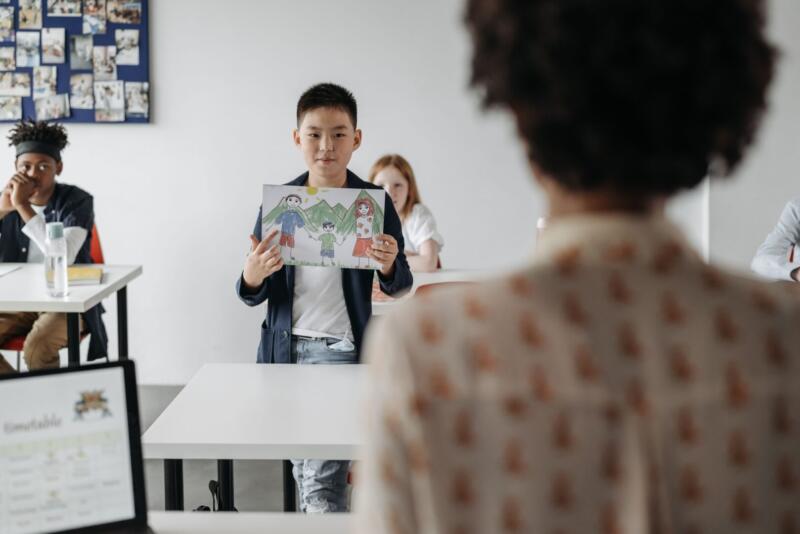
Child holds a drawing while giving his report in a classroom setting, engaging with peers and teacher.

Ask MyTutorLesson: Speaking Tips for School Reports

Speaking Tips for Your Child’s First School Report

Child holds a drawing while giving his report in a classroom setting, engaging with peers and teacher.
Image by Pavel Danilyuk via Pexels
Delivering a first classroom presentation or school report is a huge milestone for young students. It is often one of their earliest experiences with public speaking! Naturally, standing up in front of classmates and a teacher can stir up a lot of nerves. The key to building long-term public speaking confidence in children isn’t forcing perfection — it’s giving them simple, actionable habits they can practice at home so they feel prepared, grounded, and proud when presenting. In today’s Ask MyTutorLesson, speech coach Bill Patti shares practical voice, body language, and preparation tips to help your child deliver a clear, concise, and respectful school report.

QUESTION:

Students in a classroom engaging during a presentation, emphasizing education and learning.
Image by Pavel Danilyuk via Pexels
“What speaking tips will help my child earn the respect of his teacher and fellow students by sounding clear and concise as he delivers his first school report?”

ANSWER:

To help your child capture their audience and project confidence during a school report, focus on three core pillars: a clear voice, steady eye contact, and grounded posture. When students master these basic physical cues, their classmates listen more attentively, and their teacher sees a poised, well-prepared presenter.
 

3 Pillars of a Great Student Presentation


  1. VOICE & PACING Speak up, slow down, and pause
  2. BODY LANGUAGE Stand tall, make eye contact, stay still
  3. PREPARATION Practice out loud, know the opening line

  1. Voice and Pacing: Speak So Everyone Can Hear

Young speakers often rush through their presentation because they want to finish quickly. Encourage your child to use a confident, deliberate pace:

  • Project to the Back Wall:

    Remind your child to speak loudly enough so the student sitting in the very back row can hear every word without straining.
  • Embrace the Pause:

    Teach them to pause briefly between main ideas or slides instead of stringing thoughts together with “and” or “um.”
  • Enunciate Tricky Words:

    Practicing difficult vocabulary out loud beforehand prevents mumbling or tripping over words during the presentation.

  1. Body Language: Project Confidence

How a student holds themselves in front of the classroom sends a strong signal before they even speak a word:

  • Scan the Room:

    Encourage them to look up and make brief eye contact with different classmates across the room rather than staring down at their paper.
  • Ground Both Feet:

    Remind them to stand tall with both feet planted squarely on the floor to prevent nervous swaying or shuffling.
  • Keep Gestures Natural:

    Simple, calm hand gestures that match their topic make the speech feel natural and engaging.

  1. Preparation & Delivery: Eliminate the Unknown

Knowing what to expect takes the scary guesswork out of presentation day:

  • Rehearse Out Loud at Home:

    Reading a report silently is very different from speaking it aloud. Have your child practice standing up and presenting to you or a favorite pet several times.
  • Know Key Facts, Don’t Read Word-for-Word:

    Help them highlight main keywords so they are summarizing their work, not just staring at a sheet of paper.
  • Wear a “Ready and Proud” Outfit:

    Dressing in neat, comfortable clothes gives children an extra boost of personal pride when stepping up to speak.

Simple Strategies to Calm Presentation Nerves

If your child gets nervous before speaking, walk them through these quick techniques right before presentation day:

  • Memorize the Opening Line:

    Knowing their very first two sentences by heart stops beginning panic in its tracks and gives them an instant confidence boost.
  • Take Slow Reset Breaths:

    Teach them to inhale deeply through their nose and exhale slowly through their mouth right before walking up to the front of the room.
  • Find Friendly Faces:

    Tell your child to pick two or three supportive friends in the classroom to look at instead of staring at blank walls or floors.
  • Slow Down on Purpose:

    Encourage them to speak slightly slower than feels normal—this keeps their articulation clear and keeps their heart rate steady.

Build Lifelong Communication Confidence with Expert Coaching

Boy standing in front of blackboard covered in mathematical equations and holding several books. Ready to give his presentation.
Image by Sunriseforever via Pixabay

Public speaking is a superpower that opens doors throughout a student’s academic journey and beyond. At MyTutorLesson, Bill Patti works with young learners and students of all ages to build clear articulation, vocal projection, and unshakable presentation confidence.


Ready to Help Your Child Master Public Speaking?

My Tutor Lesson LogoGive your child the dedicated, one-on-one communication support they deserve. Explore our speech coaching offerings or reach out to us directly with your questions!