



What Is a Consonant Plosive? Voice & Articulation Guide

Close-up of a speaker or voice actor speaking clearly into a studio microphone.

What Is a Consonant Plosive? Voice & Articulation Guide

Unlock Articulation Clarity, Breath Control, and Crisp Consonant Production

Business team in office meeting.
Image by Sakibmia24 via Pixabay
A foundational concept in phonetics and voice training is the consonant plosive. Understanding how plosives work gives you precise control over your lips, tongue, and airflow, instantly upgrading your vocal crispness and presence. Whether you are recording a podcast, delivering a business presentation, or refining your everyday conversational speech, clarity is everything. Many speakers struggle with mumbled articulation or indistinct words simply because they have never explored the physical mechanics behind how speech sounds are formed.
 

🗣️ The Question

“What is a consonant plosive?”

💡 The Answer

A plosive consonant (also called a stop) is a speech sound made by completely blocking the flow of air in the vocal tract and then suddenly releasing it in a quick burst of breath.

🎁 Ready to Master Your Articulation?

Special Offer: Get a Free 30-Minute Voice & Speech Session to sharpen your diction and clarity!

Claim a Free 30-Minute Lesson!

Fill out a quick inquiry on our Contact Us page, and we will send a 1-on-1 private lesson invite directly to your inbox.

🔤 The 6 English Plosives

English has six main plosive consonant phonemes, divided into pairs based on whether the vocal cords vibrate (voiced) or not (voiceless):

  • Bilabial Plosives (made with both lips):
    • /p/ (voiceless): purse, talk, stopped
    • /b/ (voiced): bell, done
  • Alveolar Plosives (made with the tongue against the ridge behind the upper teeth):
    • /t/ (voiceless): talk, stopped
    • /d/ (voiced): done, played
  • Velar Plosives (made with the back of the tongue against the soft palate):
    • /k/ (voiceless): kite, queen, chronic
    • /g/ (voiced): gone, exhaust


⚡ Three Production Phases

Producing any plosive involves three distinct physical steps:

  1. Approach:

    The lips or tongue move into position to completely block the airflow.

  2. Hold:

    Air pressure builds up behind the complete blockage in the mouth.
  3. Release Burst (Plosion):

    The blockage opens suddenly, letting the trapped air escape with a sharp pop or puff of air.


Voiceless vs. Voiced Mechanics

  • Voiceless (/p, t, k/):

    Your vocal cords do not vibrate while holding the air, and the release often includes an audible puff of air called aspiration (especially at the start of a word).

  • Voiced (/b, d, g/):

    Your vocal cords vibrate simultaneously during the sound production.

 Elevate Your Diction and Articulation

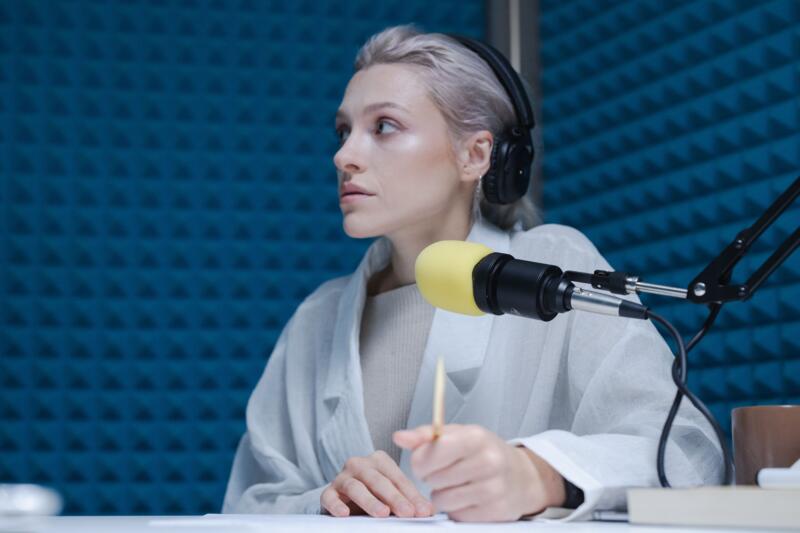
Close-up of a speaker or voice actor speaking clearly into a studio microphone.
Image by Cottonbro Studios via Pexels

Mastering plosives is just the first step toward professional-grade speech clarity. When you understand how your articulators shape air pressure, you gain the power to fix muffled speech, prevent dropped endings, and speak with striking professional authority.


🎯 Transform Your Voice with Expert Guidance

Clear articulation doesn’t happen by accident — it is built through targeted awareness and proper mechanics. Whether you want to polish your everyday speaking voice or prepare for high-stakes presentations, having an expert ear makes all the difference.

At My Tutor Lesson, our expert speech and voice coach provides personalized 1-on-1 instruction in articulation, accent reduction, public speaking, and vocal projection.


Claim a Free 30-Minute Lesson!

Unlock your full vocal potential with zero obligation:

 Fill out a quick inquiry on our Contact Us page, and we will send a 1-on-1 private lesson invite directly to your inbox. Choose between a Math Masterclass or a Speaking & Voice Coaching Session.



📋 How It Works (Step-by-Step)

  1. Click the button below to go to our Contact Us page.
  2. Fill out Step 1 of the form with your name, email address, and phone number.
  3. On Step 2 (the inquiry section), write a quick note mentioning which blog post you read and whether you want a Math or Speaking/Voice
  4. Check your inbox within 24–48 hours for our email to confirm your scheduled time.

⚠️ Terms & Conditions (The Fine Print)

  • Limit: Strictly one free 30-minute lesson per student/household across the entire mytutorlesson.com site.
  • Eligibility: Valid for new students only. Existing or actively enrolled students are not eligible.
  • Verification: To qualify, the second page of the contact form must include a specific inquiry mentioning this promotional offer and your preferred subject track.
  • Expiration: Lesson booking links must be redeemed and scheduled within 30 days of form submission.
  • Under 18 Policy: For students under the age of 18, a parent or guardian must submit the contact form and attend the initial session.