


Use code NEWSTUDENT at checkout & save 20% off your first order (any number of lessons)


Moving to a new country or working in an international business setting is an incredible achievement. However, constantly being interrupted by people asking, “Where is your accent from?” or feeling like you have to repeat yourself can be incredibly exhausting and frustrating.
If you are a non-native English speaker, having an accent is a beautiful sign that you speak more than one language. But if your goal is clarity, professional advancement, or simply blending in more naturally, changing your accent isn’t about intelligence — it is purely about mechanics.
In today’s Ask MyTutorLesson feature, we are pulling back the curtain on the physiological habits, muscle memory shifts, and rhythmic patterns needed to master standard American pronunciation.
“People notice my foreign accent and they always ask me what country I am from. It’s frustrating. How can I reduce my accent quickly to sound more American?”
Sounding more American doesn’t happen by trying to speak “perfectly.” In fact, standard American English is actually built on a framework of relaxed vocal muscles, linked sounds, and letter reductions.
To bridge the gap between your native language and standard American pronunciation, you need to focus on four core physical mechanics: vowel adjustments, the rhotic “R”, the “Flapped T,” and connected speech patterns.
Think of your accent as a set of physical habits. By rewiring your mouth and tongue movements with these five actionable tactics, you can fundamentally alter your vocal delivery:
Many global dialects—such as British, Australian, or received pronunciation—drop the “R” sound at the end of syllables. American English, however, is strictly rhotic, meaning every single written “R” must be firmly pronounced.
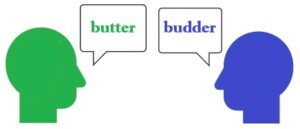 In casual conversation, Americans rarely use a sharp, crisp, explosive “T” sound when it sits between two vowel sounds. Instead, it transforms entirely.
If you try to pronounce every single word separately and perfectly, you will actually sound less American. Native speakers prioritize a smooth, continuous wave of sound, pushing words together to keep an efficient rhythm.
The fastest way to break your old native speech habits is to copy a native speaker in real-time. This technique is called speech shadowing.
Different languages utilize different parts of the vocal tract. For instance, French and Arabic use high nasal or throat resonance, while British English heavily utilizes the front lips and teeth.
Accents are not set in stone; they are just deeply ingrained muscular habits. By dedicating just ten minutes a day to recording yourself, flipping your Ts into soft Ds, and holding onto your Rs, you will be amazed at how quickly your conversational rhythm begins to blend in seamlessly.
 Are you ready to communicate with absolute clarity, command corporate presentations, and speak English with effortless confidence? Accent reduction is an acoustic skill that is best learned with a trained ear guiding you along the way.
Discover our specialized, private Accent Reduction & Voice Coaching programs. We work one-on-one with professionals, students, and expats to build personalized drills that address your specific native language roadblocks. [Schedule your introductory voice coaching session with MyTutorLesson today!]

Do you have a frustrating pronunciation roadblock or public speaking question you want answered in our next column? We would love to help! Reach out to our team anytime at info@mytutorlesson.com.